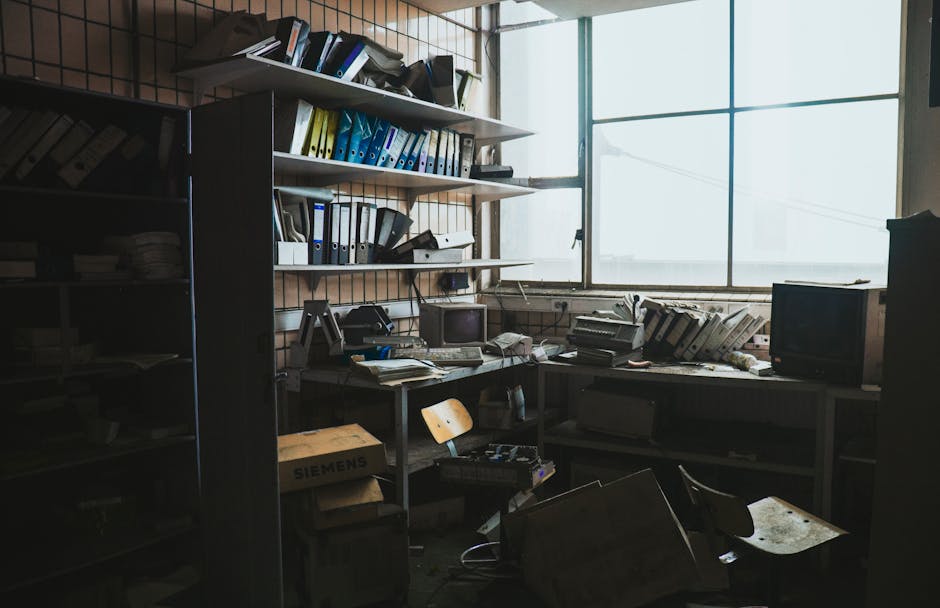
Office Clearance in Earls Court

Office clearance in Earls Court should be straightforward, careful and well organised, whether you are making space for new furniture, winding down a workspace, or removing outdated equipment from a busy commercial unit. Our office clearance service is built around practical removal work for desks, chairs, storage, boxed files, fittings and mixed office contents, with a focus on tidy handling and sensible separation of reusable and waste materials. We help businesses and organisations clear offices with less disruption, while keeping the process clear from the first enquiry to the final collection.
The service can suit smaller office rooms, shared workspaces, partitioned suites and larger business premises where items have built up over time. We can remove individual items or undertake fuller clearances where several types of furniture and office waste need to be dealt with together. If you are planning a move, a refurbishment or a closure, it helps to define what must go, what should stay and what needs careful handling. For a quotation, simply tell us what the clearance needs to cover and we can take it from there.
We work with a broad range of office contents and the jobs often combine furniture, archive material, packaging, electronics and general waste. That means the right plan is not only about lifting items away, but also about sorting the load sensibly so that different materials can be separated where appropriate. If your premises include reception areas, meeting rooms or back-office storage, we can shape the clearance around the layout. In many cases, the main aim is to restore usable space without creating more mess during the process.
Clearance work for desks, storage and everyday office items

Office furniture removal usually starts with the items that take up the most room: desks, task chairs, meeting tables, cabinets and shelving. These pieces may be solid, modular or partly dismantled, and each type needs a sensible approach so it can be taken out without unnecessary damage to walls, floors or door frames. We can clear single items, surplus furniture from a recent refit, or a full office contents load when a workplace is being emptied in stages.
Filing units, lockers and storage cupboards are common in many offices, and they often contain mixed materials or leftover paperwork. Items like these need more than simple lifting because contents may have to be checked, segregated or removed separately. If you want to keep certain furniture in place, it is useful to identify those pieces before the clearance begins. That allows the work to stay focused on the items that are genuinely ready to go.
On a practical level, a good clearance normally includes a clear path, sensible grouping of items and careful handling of heavier pieces. One well-planned visit can save time later, especially where bulky furniture has been packed into side rooms or stacked in corners. If the office includes awkward access, lift restrictions or narrow circulation routes, tell us early so the loading approach can match the building layout.
Electronic waste, equipment and mixed office contents

Many office clearances in Earls Court involve items beyond standard furniture. Computers, monitors, printers, telephones, cables and small peripheral equipment often accumulate alongside paper waste and packaging, especially in busy workplaces with changing staff numbers. These items should be separated carefully rather than thrown into the same pile as ordinary furniture. A proper clearance keeps the work organised and makes it easier to deal with the contents in a sensible way.
Where office equipment has reached the end of its useful life, the clearance needs to account for size, weight and material type. Smaller electronics may be boxed together, while larger units may need separate handling to prevent damage during removal. Mixed waste can also include stationery, archive boxes, décor, shelving accessories and kitchen-area items from staff rooms. We can clear these as part of the same job when the workspace needs a full reset.
The useful question is often not just what can be removed, but how the room should be left when the last item is out. Some customers want a basic emptying of content, while others need a more methodical clear-out that brings together furniture, equipment and general waste in one organised service. Sorting before loading is often the difference between a rushed collection and a clean finish, particularly where the office has gathered items over several years.
Business waste removal alongside office clearance
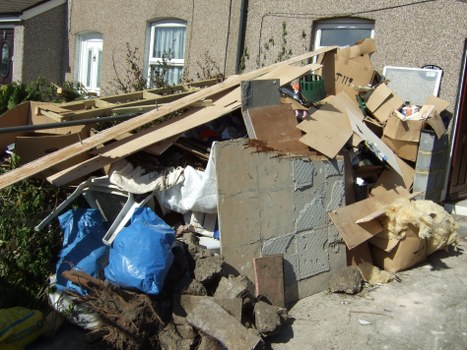
Some clearances are not limited to furniture at all. Business waste removal can cover general office rubbish, packaging, broken fixtures, unwanted storage contents and other non-hazardous materials that have built up during day-to-day operation. When these items are mixed with old desks or shelving, combining the work into one visit can be a practical choice. It avoids separate arrangements for different piles and helps the premises move back to normal use more quickly.
A mixed commercial clearance often includes a few categories at once, so it helps to think in terms of what the site needs rather than what the individual item happens to be. For example, a staff room may contain old appliances or chairs, while a back office may need boxes, archive materials and surplus stationery removed together. In that situation, a coordinated collection is usually more efficient than several isolated small jobs.
If you are comparing options, it can be useful to know whether the work is a partial clearance or a wider site emptying. That affects how much loading space is needed, how long the team may be on site and how the job is sequenced. A clear list of item types is often enough to shape the right response, and it helps us prepare a quotation that reflects the actual volume and mix of waste.
Furniture disposal, reuse decisions and practical sorting

Furniture disposal should be approached with care because office items often vary in condition. Some pieces may be worn but still usable, while others are damaged, unstable or no longer appropriate for a professional setting. The best clearance plan considers whether a piece is being removed because it is obsolete, because the room is being reconfigured, or because the item has simply reached the end of its serviceable life. That distinction helps shape how the work is handled.
It is also worth thinking about how furniture is grouped before collection. Chairs, desks, cabinets and tables may all be on the same site, but they are not always best handled in the same way. Reuseable items can be separated from those that are only fit for disposal, and that keeps the job orderly from start to finish. Clear access and a sensible item list make it easier to estimate the load and confirm what needs to be removed.
Where a workplace is being updated rather than emptied completely, a selective furniture disposal service can remove only the items that no longer suit the space. That can include a single room, a reception zone or a larger set of surplus furnishings after new replacements have arrived. If you are unsure how much should be cleared, an initial description of the room contents is usually enough to begin planning. Tell us what stays and what goes, and the rest of the clearance can be organised around that split.
Office clearance planning and what helps the work run smoothly
Good office clearance work depends on planning, not guesswork. Before the collection, it helps to decide which rooms are included, which items are staying, and whether anything needs to be kept aside for handover or recycling. A concise inventory is often enough for a quotation, especially when the job includes several furniture types or mixed office waste. Where access is awkward, a note about stairways, loading points or shared entrances can also be useful.
There are a few practical points that tend to make the day easier.
- Group items that are definitely going.
- Separate anything that contains paperwork or personal effects.
- Let us know if dismantling will be needed for larger pieces.
- Identify fragile or fixed items that should not be moved.
If you need a quotation, the most useful details are the type of office, the approximate amount of material, and whether the clearance is light, moderate or substantial. You do not need to overcomplicate it. A short description can be enough to begin. Use the main service pages if you want to separate office work from other property clearance needs, and keep the enquiry focused on the items that matter most.
What affects office clearance cost
Pricing for office clearance usually depends on the amount of material, the types of items involved and the ease of access at the premises. A handful of desks and chairs is different from a mixed clearance involving storage units, equipment, boxed files and general waste. It also matters whether the job is a straightforward removal or one that requires more careful sorting, dismantling or staged loading because of building layout or operational constraints.
Another factor is how the work is organised. A planned clearance from one level or one suite may be simpler than a multi-room job where items are spread across reception, meeting rooms and back-office areas. If the contents have already been gathered together, the job can often be assessed more quickly. If not, it is still possible to quote from a clear description of what needs clearing and how the space is arranged.
For some customers, the most useful step is simply to compare the scope of the work before making any final decisions. That way the quotation reflects the actual clearance, not a guess based on a vague title. A well-described enquiry helps us focus on the right amount of labour and collection space, which is the sensible basis for any commercial removal price.
About Earls Court
Earls Court is an area in west London, set within the Royal Borough of Kensington and Chelsea and extending towards the boundary with the London Borough of Hammersmith and Fulham. Its name is closely associated with the former exhibition and events complex that once stood here, a landmark that shaped the district’s identity for much of the twentieth century. The locality is threaded by major roads and Underground links, and it has long been known for a dense mix of residential streets, hotels, terraces and commercial premises. Much of the built environment reflects nineteenth- and early twentieth-century development, with mansion blocks, brick terraces and later infill giving the area a layered urban character.
The wider district includes familiar routes such as Earl's Court Road and Warwick Road, both of which help define movement through the neighbourhood. Historic streets and garden squares sit alongside main-road frontages, creating a contrast between quieter residential pockets and busier commercial edges. Nearby, Brompton Cemetery and the Kensington area contribute to the broader local landscape, while the West Cromwell Road and major transport corridors connect the district with central and west London. The area also sits within a part of the city that has seen repeated reinvention, from exhibition use and hotel growth to later redevelopment and ongoing residential change.
Earl’s Court station remains one of the best-known local reference points, and the surrounding streets continue to carry the marks of long urban development. The place has a mixed architectural profile, with stucco-fronted houses, late Victorian blocks and post-war additions all visible within a relatively compact area. That variety gives the neighbourhood a distinctive rhythm: some streets feel settled and traditional, while others are shaped by traffic, commerce and movement between larger parts of London. Public spaces, nearby garden squares and access to wider cultural districts all add to the area’s identity as a busy, well-connected part of the capital.
Office clearance for moves, refits and end-of-tenancy handovers
Office clearance is often needed at a turning point: a move, a refit, a lease end or a change in the way a workspace is used. In those situations, the work is not only about removing visible items, but also about helping the premises reach the next stage in a neat and manageable state. We can clear a room after furniture has been replaced, remove surplus contents before a handover, or deal with the leftovers that remain after staff have already sorted the obvious items.
Projects like these benefit from a calm, staged approach. First comes the main furniture and equipment removal, then the smaller items, and finally the remaining waste that would otherwise slow the handover. That approach suits offices, studios and mixed commercial rooms where the contents have changed over time. When the clearance is tied to a deadline, structure matters, because it keeps the job organised rather than reactive.
It is also useful to remember that not every office clearance has the same finish. Some customers want the space ready for contractors, while others want only the bulky items removed so they can complete final cleaning or decorating themselves. If you want to request a quotation, a brief summary of the premises and the item mix is the easiest place to start, and we can shape the work from there.
Recycling, sorting and responsible handling of office materials
Office clearance often produces a varied load, so sorting is an important part of the process. Furniture, paper, cardboard, plastics, fixtures and electrical items each call for different handling. When these materials are separated properly, the overall clearance becomes easier to organise and more consistent in outcome. That is especially useful when a workplace contains both long-used items and newer equipment that no longer fits the room.
Responsible handling also means being realistic about condition. Some items can be separated for reuse, while others are simply no longer fit for service. The clearance should reflect that difference without turning into an overcomplicated exercise. For many customers, the main value is a tidy, practical removal that leaves less behind to manage later. If the contents include mixed materials, we can make the process more orderly by grouping similar items together before loading.
That same logic works well in occupied buildings where space is limited. The less unnecessary shuffling there is, the easier it is to keep entrances, corridors and office floors usable while the job is underway. Simple sorting before collection also makes it easier to describe the job accurately when you request a quotation. If you are ready to move forward, use the contact page to outline the clearance and ask for a price.
Request a quotation for office clearance in Earls Court
If you need office clearance in Earls Court, the quickest way to request a quotation is to describe the rooms involved, the main item types and whether the job is a one-off clearance or part of a larger move or changeover. That gives a clear picture of the work and helps the quotation match the actual contents. There is no need to send a long explanation; a focused summary is usually enough to begin.
When the site includes several areas, it helps to note whether the clearance covers only furniture, or furniture plus general business waste, electronics and storage items. The more clearly the scope is defined, the easier it is to plan a sensible collection. If access is restricted, or if certain items need to remain in place, mention that too. A short, practical description is the best starting point for an accurate response.
To take the next step, please request a quotation here and tell us what needs clearing. If you want to compare wider service options or understand related work, you can also review our pricing and quotes information before you decide. We are ready to help with a clear, organised office clearance that suits the space and the timetable.